


Cultural Pathway
Traditional Role
ISintu saMahlabezulu is a platform dedicated to preserving and promoting the cultural heritage and traditions of the AmaNdebele people.
Our journey began with a vision to showcase the richness of our cultural experiences and to create a space where the vibrant tapestry of our traditions can be celebrated, shared, and passed on to future generations.
In Ndebele culture, isintu means “our way of life.” It represents respect, unity, and identity — values that form the foundation of who we are.
Traditionally, the AmaNdebele aMahlabezulu people have always valued community, wisdom, and heritage. Elders passed down customs, language, and moral teachings that guided families and strengthened our identity.
Today, iSintu saMahlabezulu serves as a bridge between generations by preserving ancestral knowledge, language, customs and cultural traditions. Through cultural events, storytelling, heritage activities and educational experiences, we help ensure that our cultural knowledge and practices are documented, shared and passed on to future generations.
At iSintu saMahlabezulu, we place immense value on cultural education. Our journey includes immersive experiences in traditional institutions, where we have deepened our understanding of our heritage and its enduring significance. We are dedicated to preserving the knowledge and wisdom of our ancestors — ensuring that it continues to guide, educate, and inspire generations to come.
National (UK) & International Diaspora
We proudly represent and preserve the cultural identity of the Ndebele people from Matabeleland, Zimbabwe, across the United Kingdom and beyond — connecting our communities through shared traditions, language, and values.
Cultural Role
Our commitment to cultural preservation includes participation in cultural gatherings, heritage celebrations and educational activities. We help ensure that our customs, language and cultural practices are documented, celebrated and passed on to future generations.
Traditional aMahlabezulu House – Living Heritage
This image depicts a traditional Ndebele round house (rondavel) found in the Matobo region of Matabeleland, Zimbabwe, an area of deep historical and cultural significance to the AmaNdebele people. For iSintu saMahlabezulu, such spaces represent living heritage, where cultural knowledge, customs, traditional architecture and values are preserved, taught and shared across generations.
The thatched-roof structure is decorated with distinctive Ndebele geometric patterns in earthy tones of red, white, black, and grey. These designs are more than artistic expression; they embody identity, storytelling, balance, and continuity of cultural knowledge. Traditionally led by women, this art reflects community leadership, intergenerational learning, and the transmission of values—principles central to iSintu saMahlabezulu’s mission.

The circular form of the house and the surrounding low wall reflect traditional homestead design, symbolising unity, protection, and collective responsibility. Such spaces served as centres for family life, storytelling, cultural education, and the nurturing of communal values—mirroring iSintu saMahlabezulu’s commitment to strengthening unity, cultural pride, and social cohesion within the AmaNdebele diaspora.
Set against the Matobo Hills, this structure stands as a powerful expression of aMahlabezulu heritage, architecture, and identity. It reflects a deep connection to land, ancestral wisdom, and cultural continuity, reinforcing iSintu saMahlabezulu’s dedication to preserving, educating, and promoting AmaNdebele heritage for present and future generations, both in Zimbabwe and across the United Kingdom.
Traditional Leadership and Cultural Governance

This image documents a formal cultural gathering held on 28 June 2025, illustrating how AmaMahlabezulu leadership and governance are practised within the diaspora. Seated are Roy Mtshazo Ndlovu (Secretary General) and Siphosenkosi Bhalule (Chairperson) of iSintu saMahlabezulu, alongside Chief Nhlanhlayamangwe Ndiweni and Innocent Ndibali.
In Ndebele tradition, such seating arrangements reflect respect, authority, and collective responsibility. The use of traditional imvunulo and cultural artefacts reinforces the role of elders and leaders as custodians of knowledge, values, and social order. These gatherings provide a structured space for cultural guidance, decision-making, and intergenerational learning.Through events like this, iSintu saMahlabezulu plays a vital role in preserving traditional governance systems, educating younger generations, and maintaining cultural continuity among AmaNdebele communities living in the United Kingdom.
Heritage Education in Action
This image captures a joyful and meaningful heritage education moment during the iSintu saMahlabezulu cultural event on 28 June 2025. Young community members are actively engaging in a traditional AmaNdebele practice, using a wooden pestle and clay mortar—tools historically used for pounding grain and preparing staple foods in Ndebele households.
Dressed in traditional attire, the children learn by doing, reflecting an educational approach rooted in participation, observation, and shared experience. Surrounded by traditional artefacts such as woven baskets and gourds, the setting creates an authentic learning environment where culture is not explained only in words, but experienced firsthand.
This moment demonstrates iSintu saMahlabezulu’s commitment to passing on ancestral knowledge to the next generation, nurturing cultural pride, confidence, and identity among young people growing up in the diaspora. Through hands-on heritage education, the organisation ensures that AmaMahlabezulu traditions remain alive, relevant, and proudly carried forward

Cultural Education
Heritage Level
At iSintu saMahlabezulu, we place immense value on cultural education.
Our cultural learning includes engagement with traditional institutions and community elders to deepen our understanding of AmaNdebele history, customs, language and heritage. We share cultural knowledge, historical perspectives and traditional values through educational activities and intergenerational learning, helping future generations understand and preserve their cultural identity.
We continue to be lifelong students of our heritage — expanding our understanding and sharing the timeless wisdom of our ancestors with future generations.
Amabutho esiZwe and Traditional Leadership in Practice
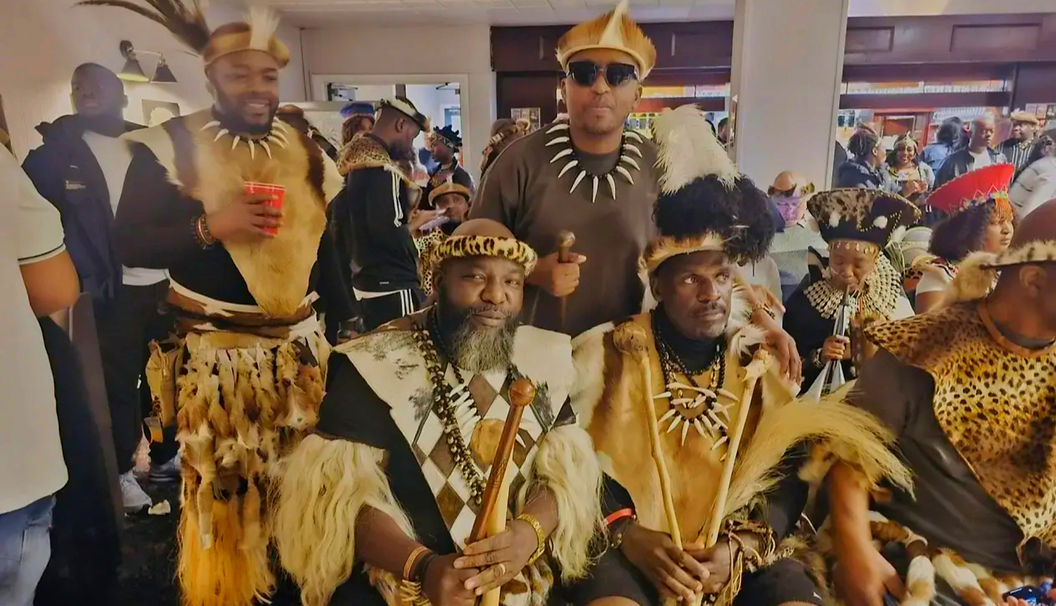
This image documents a moment of living AmaMahlabezulu heritage, showing amabutho esiZwe (traditional community regiments) gathered in full ceremonial regalia surrounding uMdladla Mkheswa, in the presence and authority of Chief Nhlanhlayamangwe Ndiweni.
Amabutho esiZwe are an essential part of AmaNdebele governance and social organisation. Historically, they were responsible for community protection, discipline, service, and the transmission of cultural values. In contemporary settings, including the diaspora, their role has evolved to include heritage preservation, ceremonial participation, and cultural education.
Symbolism and Cultural Meaning
The traditional attire worn in this image—animal skins, beadwork, headgear, flywhisks, and ceremonial staffs—carries deep symbolic meaning. These items reflect:
-
Rank and responsibility within the community
-
Respect for traditional authority
-
Continuity of ancestral customs passed down through generations
The formation of the group, standing together around uMdladla Mkheswa, represents collective guardianship of leadership and the principle that authority is upheld and protected by the people. The presence of Chief Nhlanhlayamangwe Ndiweni situates this moment within the broader framework of legitimate traditional leadership and governance.
Heritage Education in the Diaspora
Captured during an iSintu saMahlabezulu cultural gathering in the United Kingdom, this image demonstrates how AmaMahlabezulu traditions continue to be practised beyond their homeland in Matabeleland. Rather than symbolic display, this gathering serves as a living classroom, where younger generations and the wider public learn about:
-
Traditional leadership structures
-
The role of amabutho in society
-
Cultural identity, responsibility, and unity
Through such moments, iSintu saMahlabezulu advances its mission to protect, teach, and celebrate AmaMahlabezulu heritage, ensuring that ancestral knowledge remains active, respected, and relevant for future generations.

Community Kitchen: Food, Catering & Cultural Care

This image captures Priscilla Dlamini of iSintu saMahlabezulu, leading food preparation and service as part of the Food, Catering & Culture Committee during the AmaMahlabezulu community event in Manchester.
Serving traditional meals is a vital cultural responsibility within AmaMahlabezulu heritage. Under Priscilla’s leadership, the community kitchen provided nourishing, culturally significant dishes prepared with care, respect, and ancestral knowledge. The food offering created a welcoming space where elders, families, and guests could gather, connect, and experience cultural hospitality through shared meals.
The kitchen represents more than catering—it reflects Ubuntu, collective responsibility, and the preservation of food traditions passed down through generations. Through this work, iSintu saMahlabezulu ensures that culture is not only remembered but actively lived, tasted, and shared within the diaspora.
Mehlokazulu: Living Performance of AmaMahlabezulu Heritage
This image captures a powerful live cultural performance by Mehlokazulu, presented during an iSintu saMahlabezulu community gathering. Based in Ireland and born in Kezi, Ratanyana in Matabeleland, Mehlokazulu brings ancestral performance traditions into the diaspora, connecting homeland roots with contemporary community spaces.
At the centre of the hall, Mehlokazulu leads a dynamic expression of AmaMahlabezulu and AmaNdebele heritage through traditional dance, rhythm, and movement. The performance draws the audience into a shared cultural circle, where elders, youth, and families actively participate through song, clapping, and call-and-response.
This moment reflects culture as a living practice—adaptable yet deeply rooted. By performing within community gatherings, Mehlokazulu helps preserve intergenerational knowledge, strengthen cultural identity, and ensure that AmaMahlabezulu traditions continue to thrive beyond Matabeleland.

Cultural Heritage Experience
Celebrating Our Heritage. Inspiring Our Future.
The Cultural Heritage Experience is iSintu saMahlabezulu’s first major initiative — a vibrant celebration of the rich traditions, art, and identity of the aMahlabezulu people from Matabeleland, Zimbabwe.
Through live performances, storytelling, exhibitions, and hands-on workshops, this project brings our culture to life. It showcases traditional music, dance, dress, crafts, and cuisine, while creating a warm and inclusive space where generations connect, knowledge is shared, and pride in our heritage is rekindled.
Our RoleAs the organisers and custodians of this initiative, iSintu saMahlabezulu leads the coordination of cultural activities, curates authentic expressions of aMahlabezulu traditions, and collaborates with artists, schools, and cultural partners across the UK. Our aim is to ensure that the beauty, wisdom, and heritage of our culture continue to inspire future generations while strengthening connections and understanding between diverse communities.
Our Impact
-
Reviving and preserving aMahlabezulu art, language, and customs
-
Strengthening cultural identity within the diaspora
-
Promoting unity, education, and cross-cultural exchange
ISintu saMahlabezulu Cultural Experience
As the firewood burns steadily beneath the pots, the traditional preparation of utshwala (traditional beer) unfolds as a living classroom of AmaMahlabezulu heritage. Brewed slowly over open flames, this practice preserves ancestral knowledge passed down through generations, teaching patience, respect, and cultural responsibility. Every step reflects wisdom gained through participation, observation, and lived experience.
This cultural moment was attended by Roy Mtshazo Ndlovu, Secretary General of iSintu saMahlabezulu, during the AmaMahlabezulu cultural gathering held in Kezi, Ratanyana, in August 2025. His presence highlights the importance of leadership in safeguarding cultural traditions and ensuring they are practiced, documented, and passed on to future generations.
During AmaMahlabezulu cultural gatherings, utshwala is shared not merely as a drink, but as an educational and unifying tradition—bringing together elders, youth, and the wider community. Through such practices, AmaMahlabezulu heritage remains alive, relevant, and proudly preserved.


This image captures the vibrant spirit of an iSintu saMahlabezulu cultural gathering, where community members proudly came together to celebrate and purchase traditional Mahlabezulu imvunulo (regalia and attire). Displayed are beautifully handcrafted beadwork, accessories, and garments that reflect the heritage, identity, and values of the AmaMahlabezulu people.
The event was filled with excitement and pride as participants engaged with culture, supported local cultural artisans, and reconnected with ancestral traditions. Moments like these highlight the importance of preserving, living, and passing on our culture to future generations.
iSintu saMahlabezulu continues to serve as a platform for cultural revival, unity, and education—demonstrating that our culture is alive, valued, and thriving. Through such gatherings, we strengthen cultural pride, promote unity, and ensure our heritage remains respected and relevant for generations to come.
Our culture lives. Our identity stands. We build together.
Siyaziqhenya!
Ndebele Cultural Education and Language Revitalisation
At iSintu saMahlabezulu, we recognise that language is the heartbeat of culture. This project is dedicated to preserving and revitalising the isiNdebele language and traditional knowledge through educational programmes, storytelling, and intergenerational exchange.
Through workshops, cultural classes, and online learning initiatives, we bring together elders and young people to share knowledge, explore Ndebele history, and celebrate the values that shape our identity. The initiative also promotes the teaching and everyday use of isiNdebele across the UK and beyond, helping the next generation reconnect with their roots.
Our Role and Contribution:
-
Coordinating cultural educators and community elders to lead learning sessions.
-
Developing creative and accessible isiNdebele learning resources.
-
Hosting storytelling and cultural knowledge-sharing events.
-
Promoting unity, pride, and cultural continuity among the Ndebele diaspora.


Ndebele Arts, Music, and Heritage Festival
This vibrant initiative celebrates the creative spirit of the Ndebele people through art, music, dance, and traditional craftsmanship. The Ndebele Arts, Music, and Heritage Festival provides a platform for artists, performers, and community members to showcase their talents while sharing the beauty and depth of Ndebele cultural expression with wider audiences.
Through live performances, exhibitions, and cultural showcases, the festival strengthens cultural pride, promotes intercultural understanding, and ensures that traditional practices continue to thrive in modern settings. It also offers younger generations the opportunity to experience, learn, and participate in the living traditions of their heritage.
Our Role and Contribution:
-
Organising and curating performances, exhibitions, and cultural showcases.
-
Supporting Ndebele artists, musicians, and craft makers to share their work.
-
Promoting intergenerational participation and cultural exchange.
-
Preserving artistic traditions while inspiring innovation within the Ndebele creative community.
Ndebele Arts, Music, and Heritage Festival
This image features a traditional AmaMahlabezulu drum, a vital instrument used in cultural gatherings, ceremonies, and community celebrations. Handcrafted from wood and stretched animal hide, the drum reflects ancestral craftsmanship and deep cultural knowledge passed down through generations.
This drum represents heritage in motion—a powerful symbol of identity, unity, and cultural preservation within the AmaMahlabezulu way of life. During AmaMahlabezulu cultural gatherings, the drum is not merely played—it calls the community together, guiding song, dance, and collective memory.
Within heritage education, the drum serves as a living teaching tool. Its rhythms pass on history, values, and shared identity from elders to younger generations. iSintu saMahlabezulu proudly uses the drum during cultural events, celebrating uBuntu bethu—our shared humanity, togetherness, and respect for one another.
Through sound, movement, and participation, the drum keeps AmaMahlabezulu culture alive, visible, and proudly preserved for future generations.

iSintu saMahlabezulu Cultural Heritage Experience – 2025
Cultural Proficiency
Heritage Preservation Traditional Event Coordination
Community Engagement Digital Storytelling
Languages
Preserving the Voice of Our Identity
Ndebele Xhosa
Nambya Ndau
Shangaan Tonga
Kalanga Tswana
Sotho Khoisan
Venda